
Communities of Hope Internship
Communities of Hope Website: hopeful.rwu.me
For my internship with Communities of Hope, I was one of the two web designers for their website. The website, when I first started my internship, was rather inconsistent and did not have a system in place across all of the pages. My partner and I were tasked with cleaning up the existing pages, updating the content, and uploading the content that was missing.
Step 1: Cleaning up the Website and Navigation
My partner and I were given a roadmap of what our employer wanted the website to look like, and we then had to determine how to make their vision a reality. The first step we determined was to create the navigation and all of the pages that he wanted, to ensure that everything would be accessible and had a place to be uploaded. Another issue that we had to deal with right away was where we were going to be placing large audio files that were connected to the organization's podcast, which ran weekly. When we were put in charge of the website, all of the massive audio files were in the media section of the website and were uploaded directly, which was putting quite a bit of strain on the website and causing low site health. By talking with our employer, we determined that the best course of action was to upload it to an outside source, RSS, and then embed that code into the website to make sure that the files could still be viewed but would not affect the website.
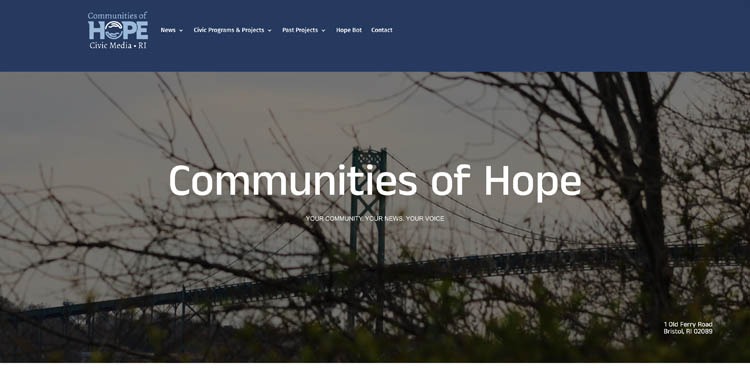
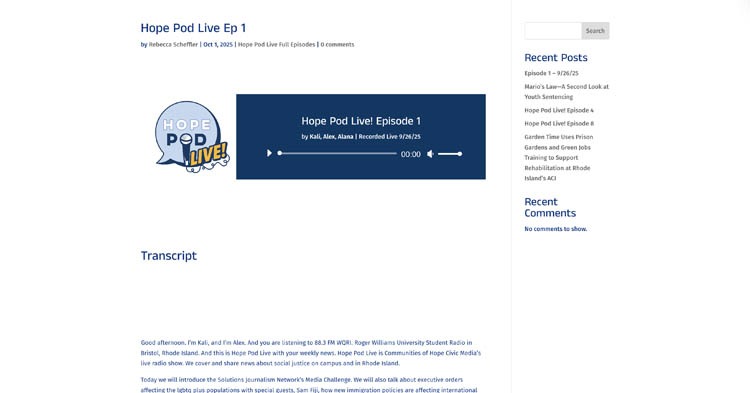
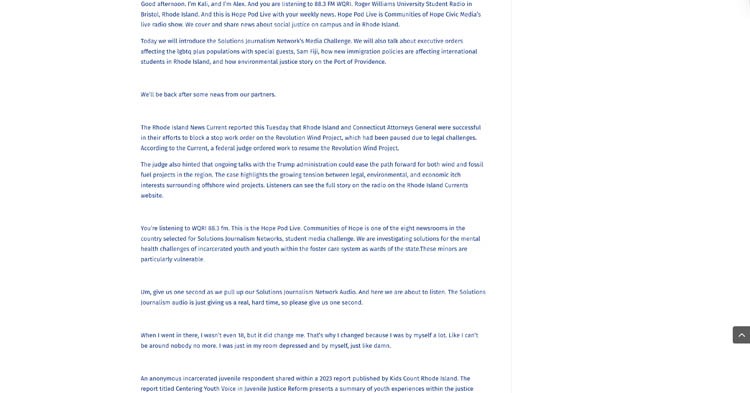
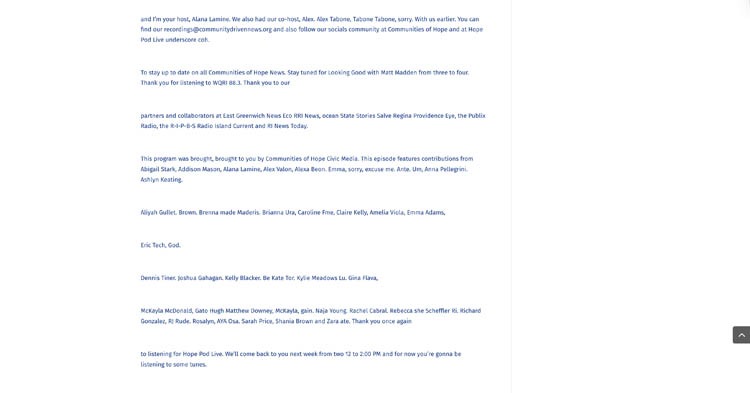
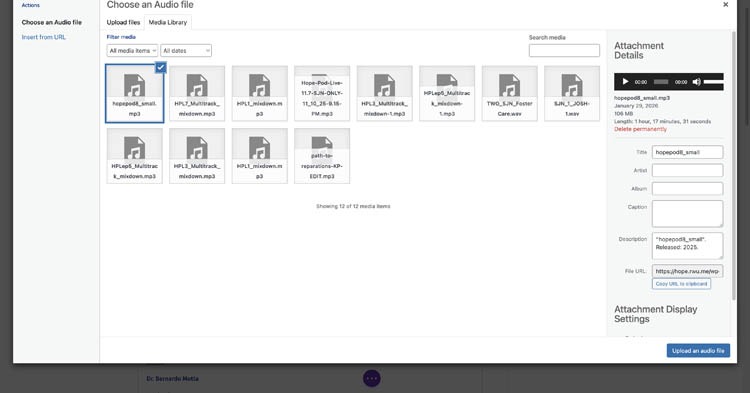
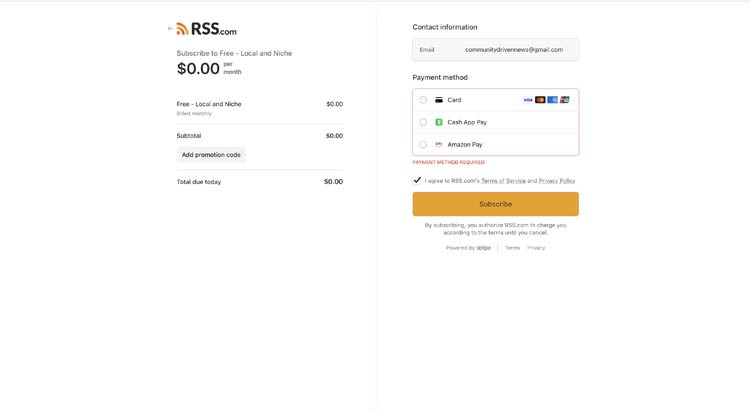
This image slider showcases the original stories and audio files, along with the updated navigation and the new platform for the audio files.
Step 2: Uploading all of the Content that was Behind or Overdue
After my partner and I had cleaned up the website and gotten a system working, we started to get stories up on the website. We broke the different types of stories into groups, and each took sections. I was in charge of Hope Pod Live!, Hope Pod News, and all of the smaller stories from Hope Pod Live! (Immigration, Data Reporting, Communities and Civics, and Sports), while she was in charge of the Solutions Journalism Investigations, Newsletter, and Queer Currents. Breaking up the topics made it much easier for us to determine what each of us was in charge of putting up on the website to ensure that all of the content got posted. To aid in keeping track of all of the content, we made a sheet that listed all of the stories that we had put up on the website and used the master schedule from the organization. However, even though we each had parts that we were in charge of, we would put time aside during the week to meet up and see if either of us needed help, and to make sure that all of the content that was going up had a consistent layout and style. We intentionally made layouts together in the beginning to make sure that all of the content looked similar, but as the weeks progressed, we started to work and refine the layout to make it the most effective and clear.
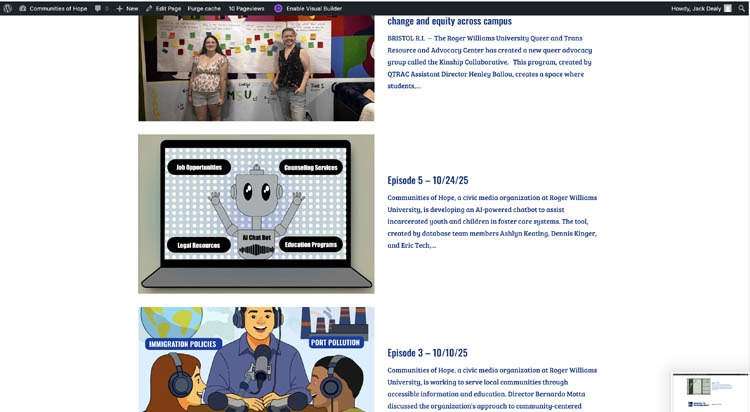
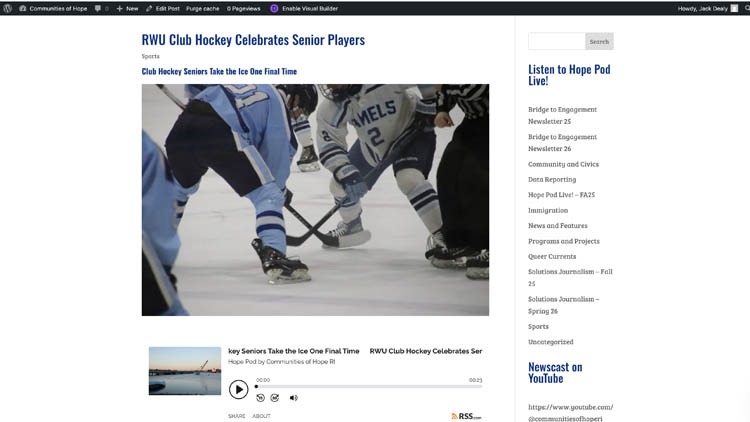
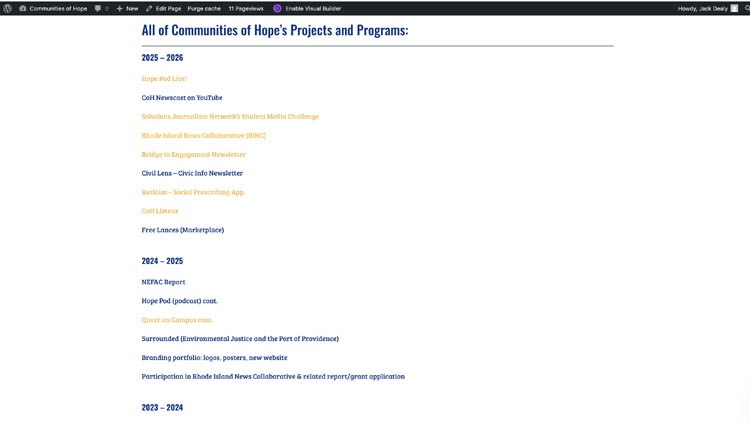
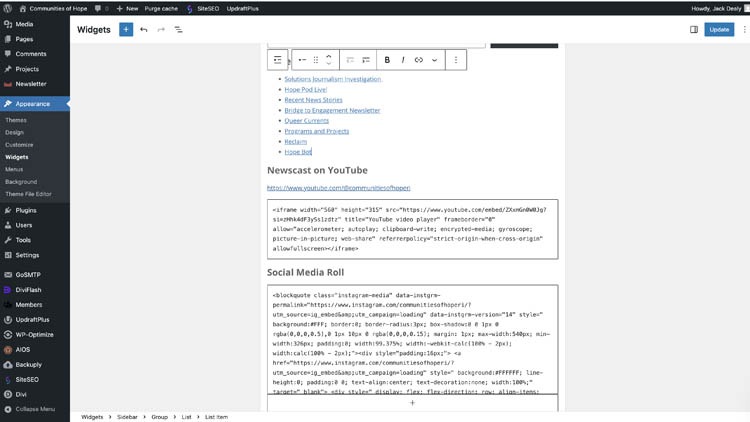
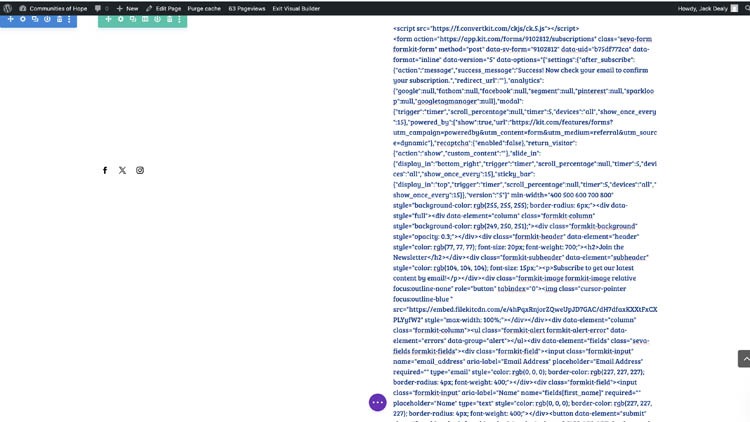
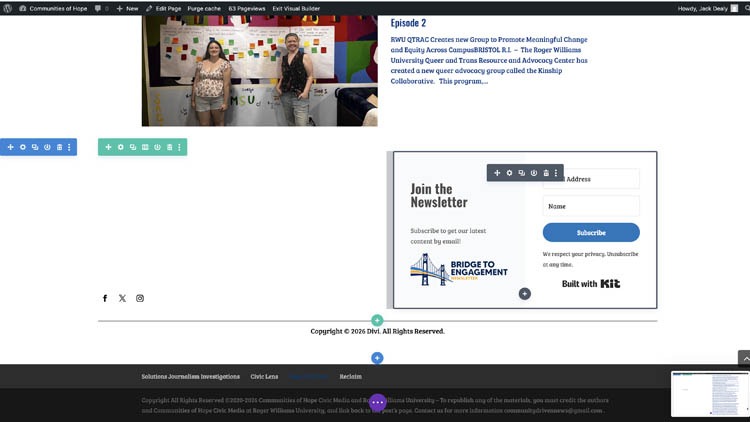
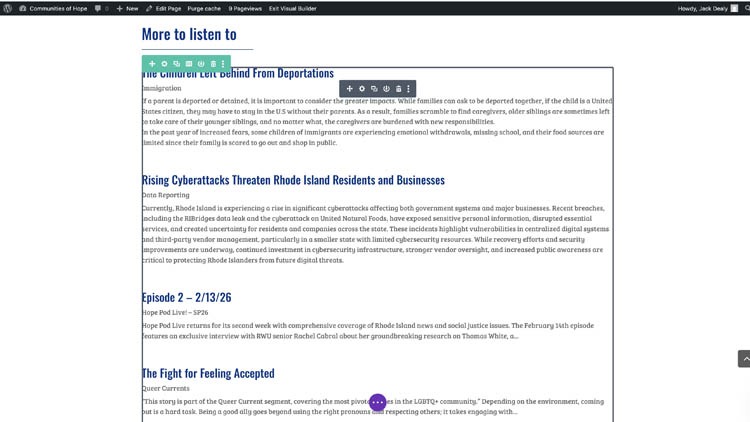
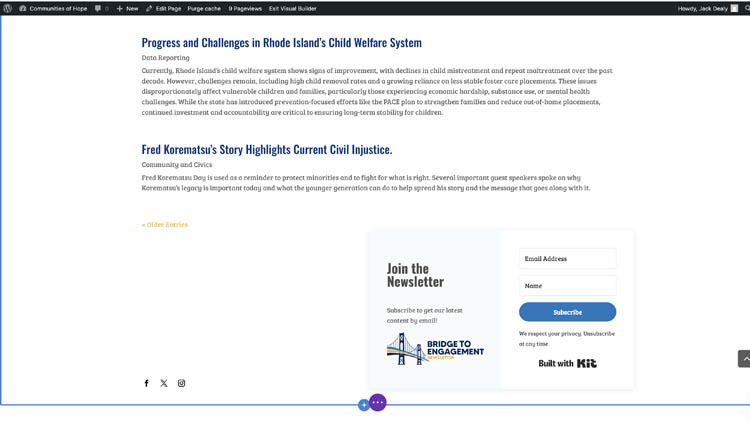
In the image slider above are some of my layouts and designs for the website's stories.
Midway Reflection:
Looking at this internship, at around the halfway mark, I am starting to look at all of the challenges and goals that I overcame during this period. At the start of this internship, this website seemed like a daunting task, and even our team lead was unsure of how it was going to get done. In the beginning, my team lead was right, it was very annoying and finicky; however, having a partner through those struggles was so incredibly helpful, to have someone to bounce ideas off of and someone there to critique your own ideas was so helpful. Furthermore, these struggles helped me to learn. I had to learn to find other ways to get files to load on the website to help its health, and I had to work on creating a whole new layout with a WordPress theme that I had never worked with before. But all of these challenges helped me to learn more about web design and working with others. Most of this company's staff is editorial, and they create the stories that I need to upload, so on more than one occasion, I would need to reach out to them because information was missing. This experience helped me to learn what it may eventually be like to work in a firm where most designs are a team effort, and there is a lot of communication involved. So far, I think that this internship has been a success despite all of the challenges and issues that I have faced because it has helped me to learn and adapt.
Website Error:
Shortly after the halfway mark, my partner and I ran into a major issue. The website theme needed to be updated. When we went to update the theme, the information would not migrate to the new interface. Since the update did not work, we attempted to revert to the original theme version, but since some of the content had migrated, it would not allow us to edit. After that, we were stuck with an issue of not being able to edit the website in either version of the theme. We determined that we may have been able to fix the error in the website if we could access the c-panel; however, unfortunately, the founder of the organization did not have the password and username to enter the c-panel, and without knowing who owned the domain, we were unable to talk to the person who owned the hosting to get into the site through the system backend. As a result of not being able to fix the error, we determined that we would need to create a website from scratch with a completely different domain.
Step 3: Get all of the Content Backup on the New Website/Domain
Once my partner and I had acquired our new domain, we immediately started to add all of the content back onto the website and to modify the website's theme to look very similar to the original website. The process of getting all of the information up on the website occurred very quickly. In about a week, we were able to get most of the content back up. One thing that aided us in getting the information up was the usage of a plug-in to download all of the existing media on the original website. By downloading all of the original media, we did not need to find all of the original copies and resize them for the website all over again, and could simply select the content that we wanted on each page. In addition, we were able to copy and paste the copy the copy from the original website to duplicate the pages. All in all, having all of the information in one place aided in our ability to get all of the content back on the website.

Step 5: Heartfest/Finish Uploading Content
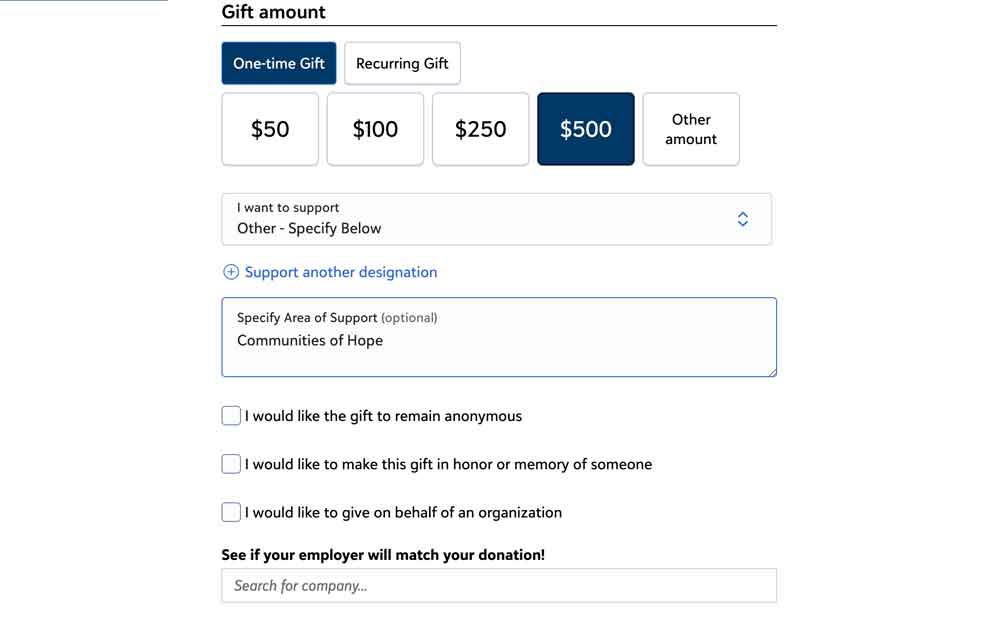
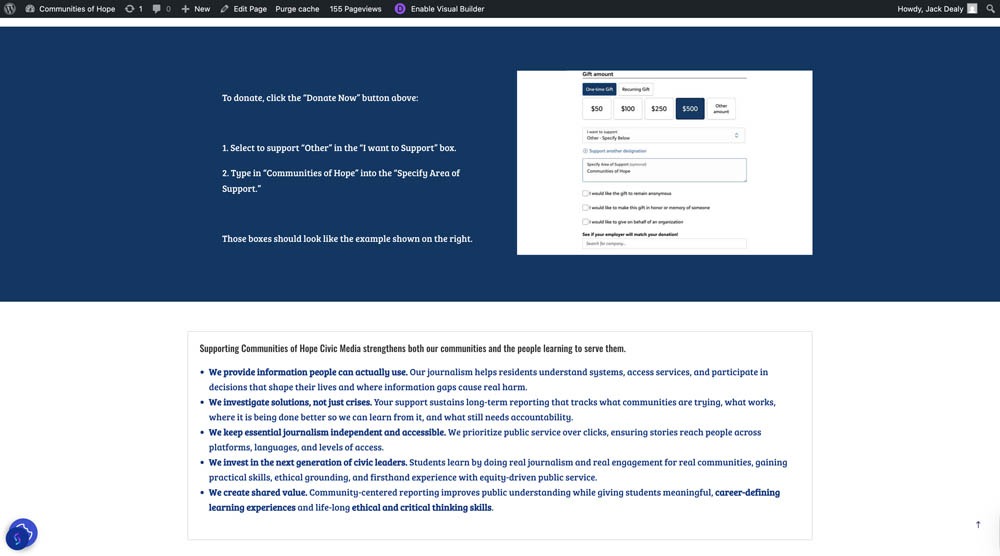
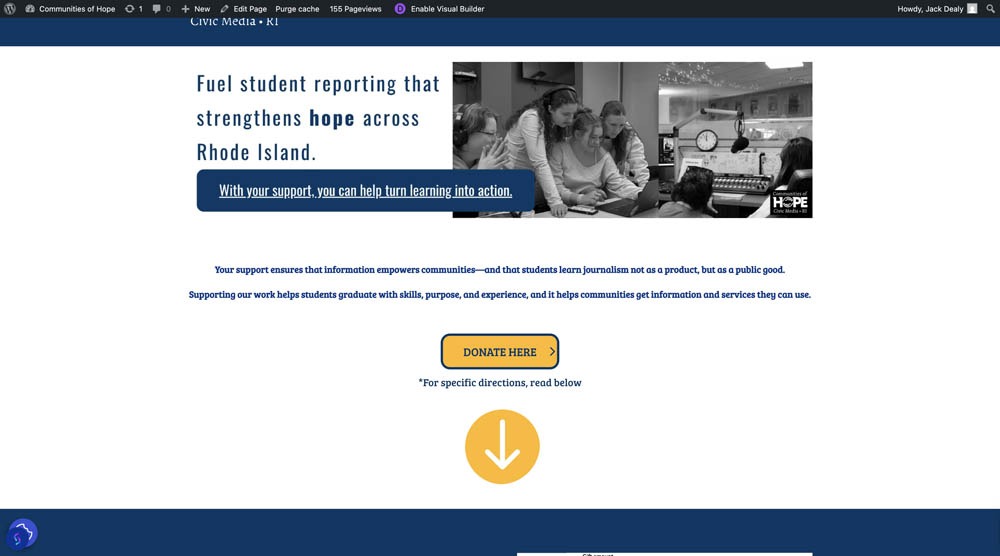
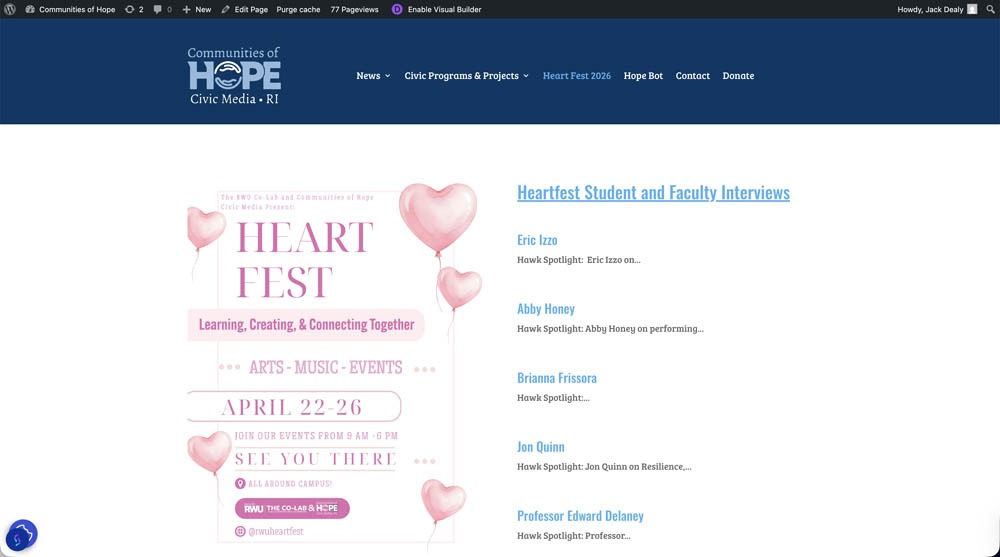
Following the slight issue with edibility and creating the new website, we began to get all of the current content up on the website. One of the major items was Heartfest. Heartfest was a new festival this year that focused on celebrating the humanities on the Roger Williams Campus. My partner and I were in charge of getting all of the information and schedules up on the website, as well as the interviews that reporters had received about the topic. In connection with getting up the Heartfest information, we had to create a donation page. The donation page was very important to the organization so that they could continue to receive funding to pay interns in the future and create more elaborate events. This page was interesting to create because the donations must move through the university. I had to create a link to the university donation page with specific directions on how to donate specifically to Communities of Hope rather than the university, because the donation page would reset anytime it was returned to. I had to learn how to effectively include these directions while not detracting from the main purpose of the page, which was achieved by having others critique the page to reach the desired result. Ultimately, the donation page served as an excellent example of getting feedback from others to create improvements.

Final Reflection
This entire experience helped me to learn about how a media organization and a non-profit are run. The process was definitely not the smoothest, and there were many hurdles to overcome, but I learned so much and gained so much experience over the course of a single semester. I loved getting to learn about putting together all of the different work of others and working with others from different majors to create one result. So much of design is meant to exist in relation to others, so by working with an organization, I was able to fully appreciate creating works for the public and others. I learned the importance of working with others and being able to communicate with others in order to meet deadlines and understand that there are times when you are going to have to tell a client that something is not possible and that there is a need to pivot to create a better outcome. All in all, I am extremely appreciative of the experience of being one of Communities of Hope's web designers and the opportunity to create work that can truly effect peoples lives.